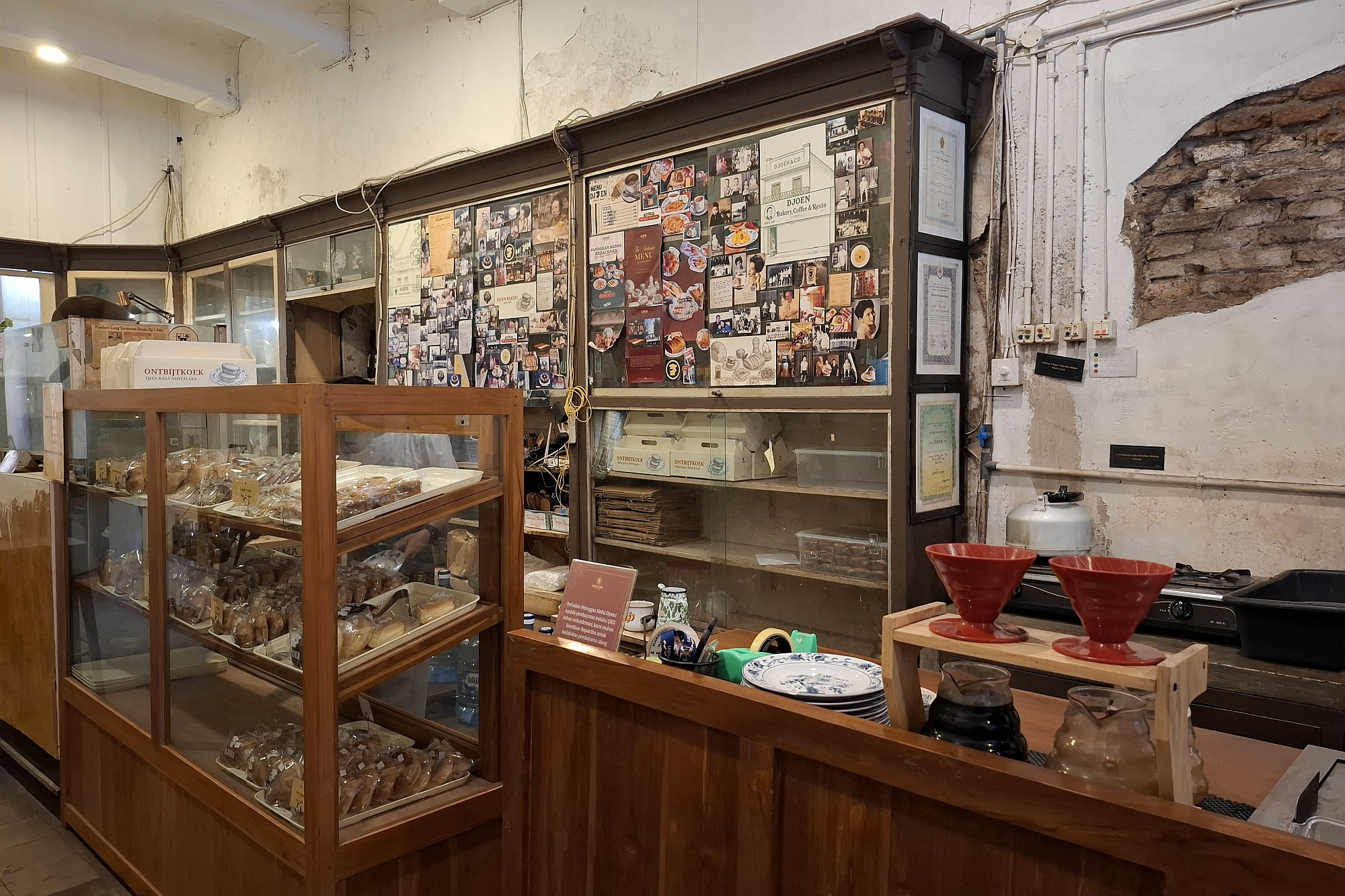
Walking into Kedai Djoen (Instagram) feels less like entering a café and more like stepping into another era. Hidden just off the busy stretch of Malioboro, this old bakery and coffee shop has been part of Yogyakarta since 1935. What started as a traditional bakery has slowly evolved into a bakery, coffee shop, and restaurant, while still preserving the soul of the original store.
Kedai Djoen became my place to slow down. The moment I stepped inside, the atmosphere changed completely. The thick old walls, worn wooden counters, exposed bricks, and aging cabinets created a quiet sense of comfort that modern cafés often try too hard to imitate.
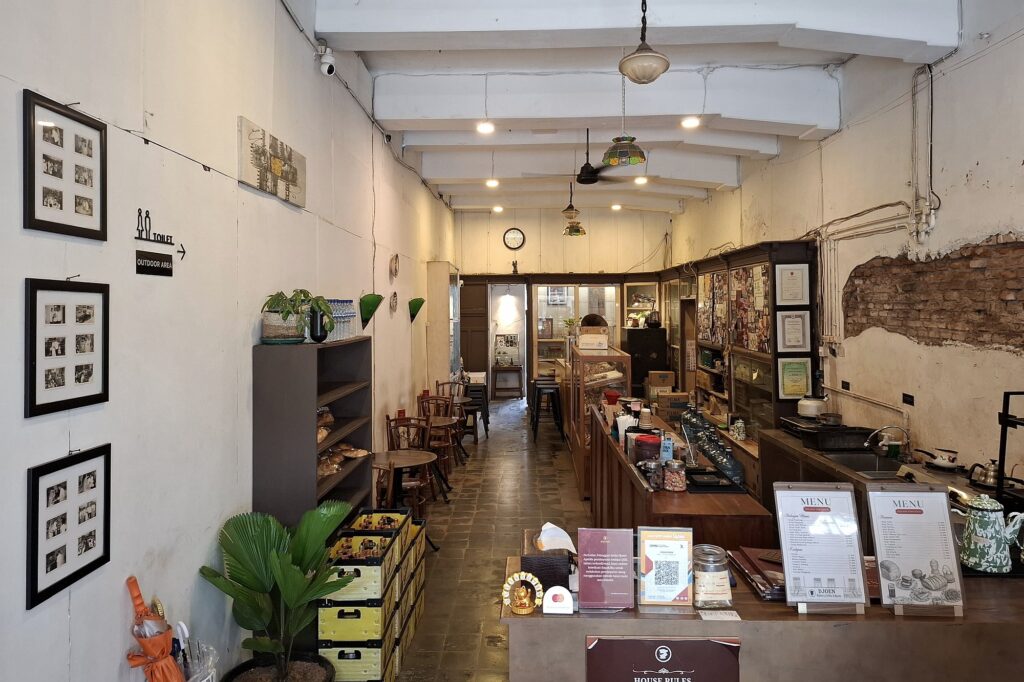
Nothing here feels manufactured. Even the imperfections — the cracked walls, the faded photographs, the old wooden shelves — give the space its charm. It feels lived in. Honest. A place that has witnessed generations pass through Malioboro’s streets.
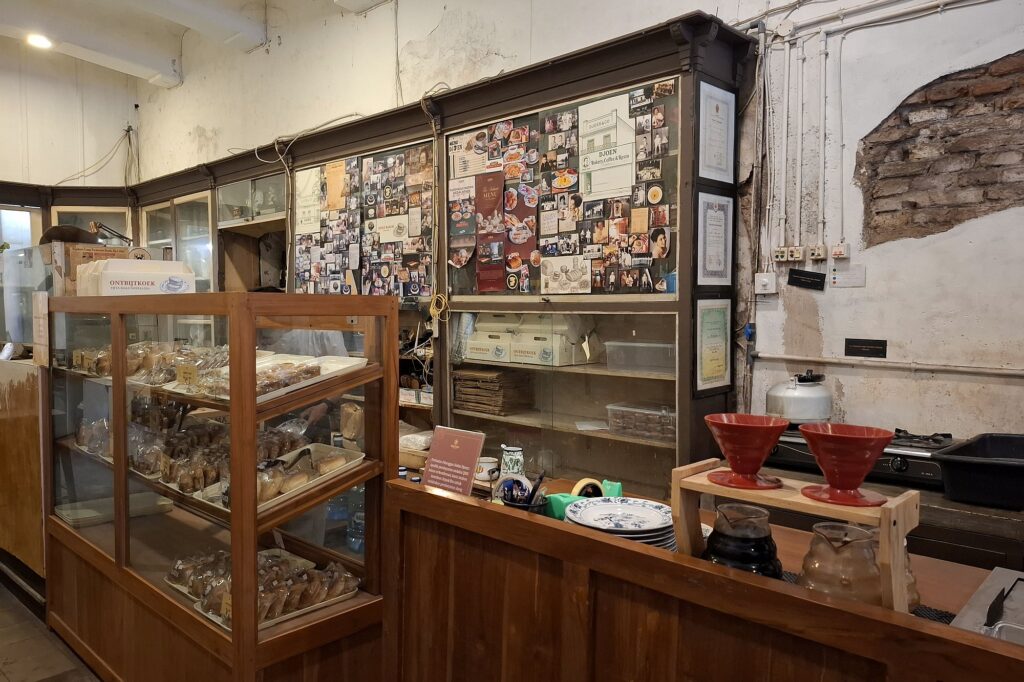
At the front counter, trays of classic breads and pastries immediately catch your attention. I ended up ordering a cup of hot black coffee alongside their classic chocolate donut. Simple choices, but somehow perfect for the setting.
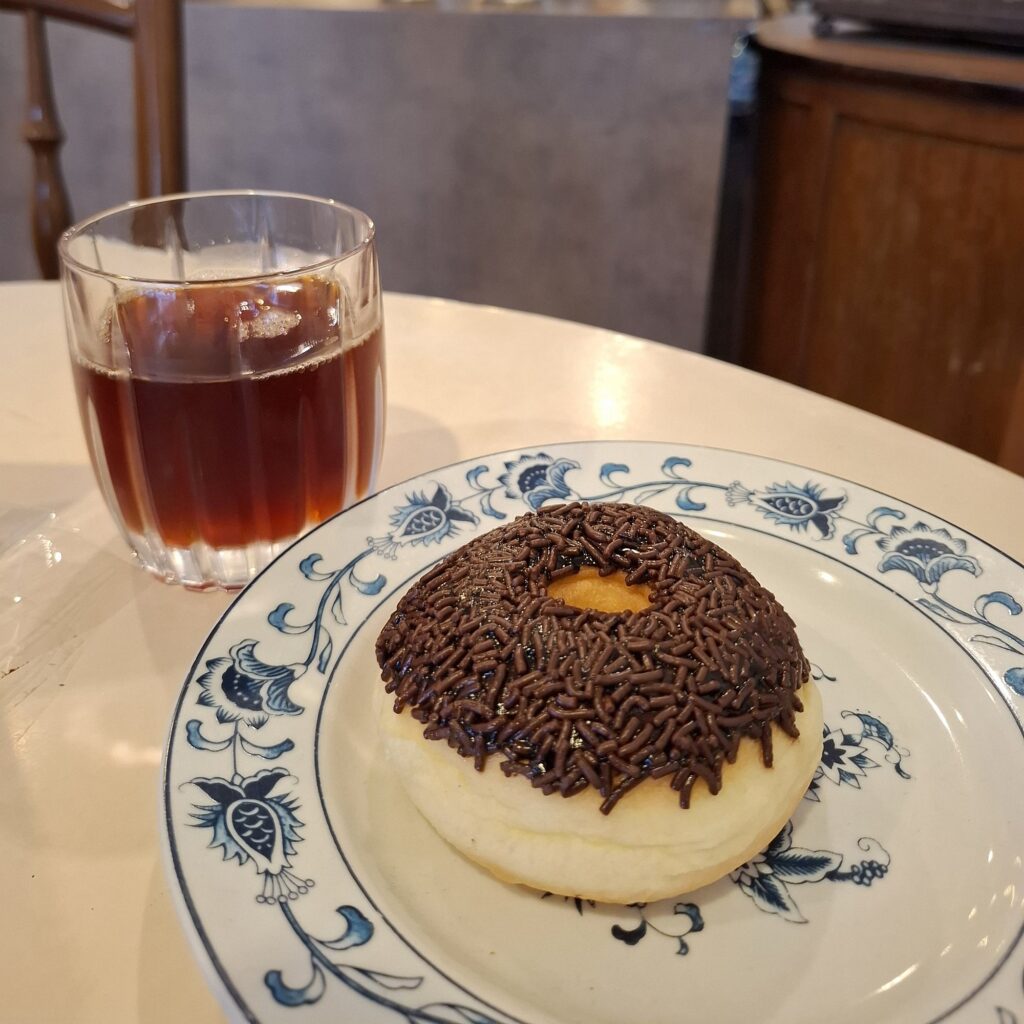
The donut instantly reminded me of childhood bakery visits. Soft bread covered with chocolate sprinkles — nothing fancy, nothing reinvented, and that is exactly why it works. In a city now filled with specialty cafés competing over aesthetics and experimental menus, Djoen quietly reminds us that comfort can still come from the simplest things.
The coffee itself was straightforward and comforting. Not overly acidic or overly complex. Just the kind of ice coffee you want while hiding from the afternoon heat outside.
What makes Djoen memorable is not only the coffee or the pastries. It is the feeling of continuity. Since 1935, this place has survived changing generations, changing trends, and the transformation of Malioboro itself. Yet inside, time seems to move a little slower.
And perhaps that is why Djoen Coffee matters. In the middle of a fast-moving city, it gives people a space to pause.