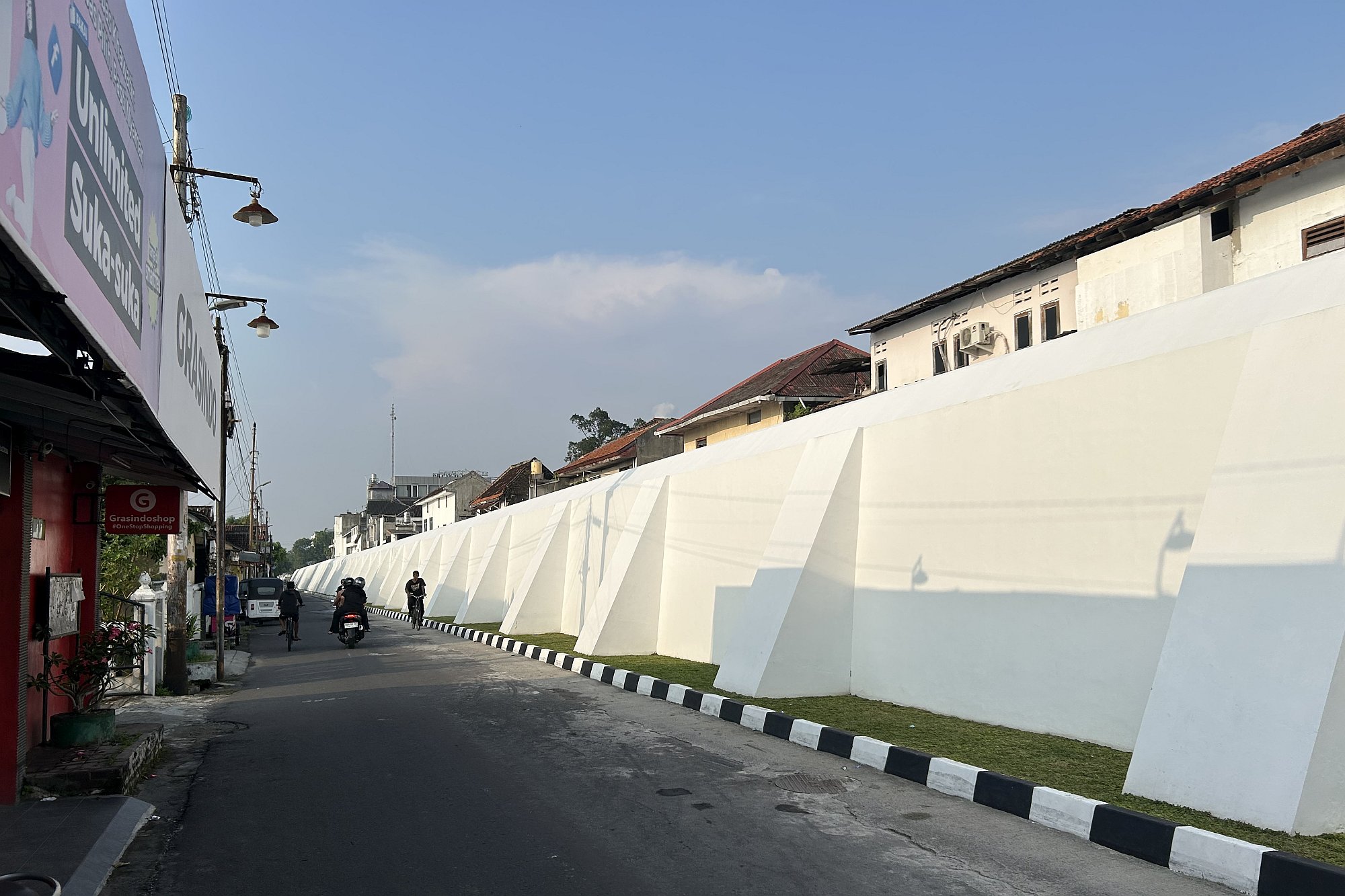
The sidewalks of Yogyakarta are far from convenient. My journey began pleasantly enough from Yats Colony, where wide paths lined with potted greenery offered a peaceful start. However, as soon as I crossed the first traffic light, the path gave way to uneven, narrow paving. In several parts, I found myself forced onto the road, weaving between cars and motorbikes hurrying through the humid morning hours.
Just as the rhythm of the traffic began to peak near the 1 km mark, my first reward appeared from the haze: the west gate of Benteng Baluwerti.
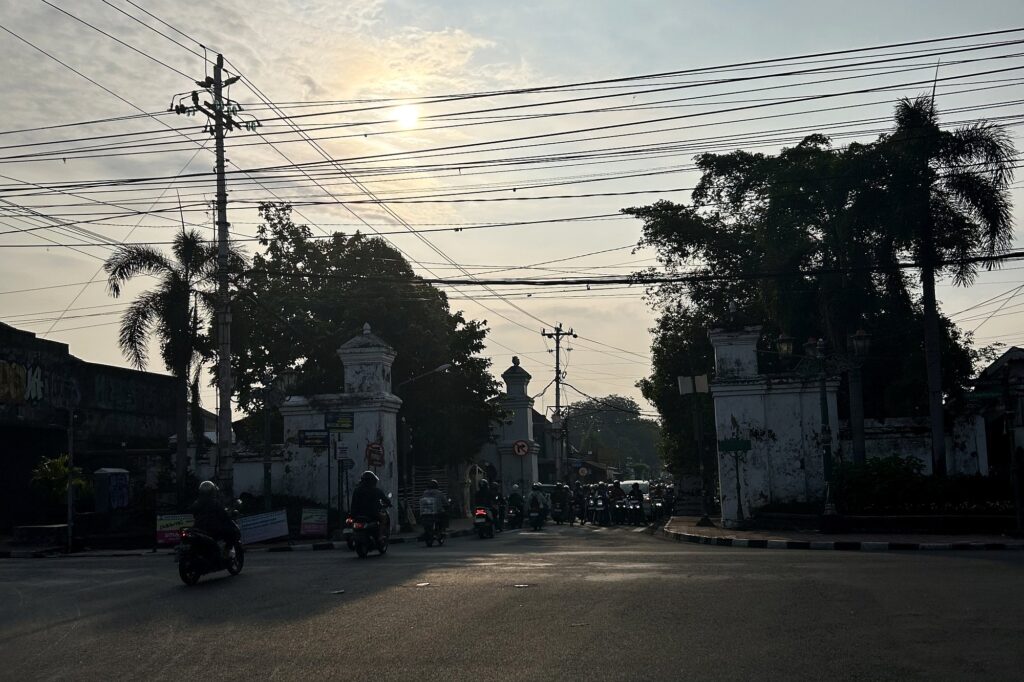
This fortress once formed the massive protective shell of the Kraton (Yogyakarta Palace). Built in the 1780s, these walls have witnessed centuries of transformation, surviving wars and natural disasters only to be meticulously rebuilt. As I ran toward the west gate, I tried to imagine its original arched form, now replaced by the sturdy, square structure that stands today. It has five of these main gates, known as Plengkung—one on each side and an extra guarding the north—serving as silent sentinels that turn a simple morning jog into a sprint through history.
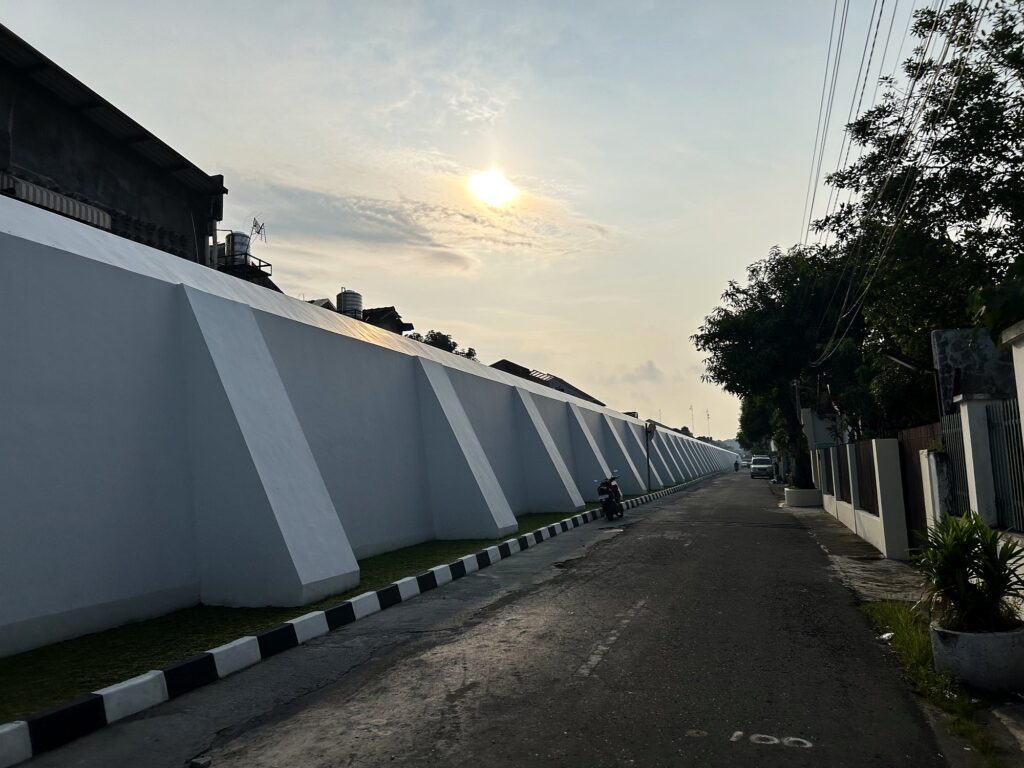
As I turned north and passed through the gate, the atmosphere shifted instantly; the roar of the morning commute faded into a rare, heavy silence. To my left, the walls of Benteng Baluwerti rose up like a clean slate, looking remarkably new against the softening sky. While revitalization efforts continue across the city, the work on this western stretch appears complete, resulting in a pristine white surface that glares brilliantly in the morning sun. I maintained my pace along the base of the structure, following the sharp line of the wall until I reached the corner and turned right, tracking the northern perimeter toward the next gate.
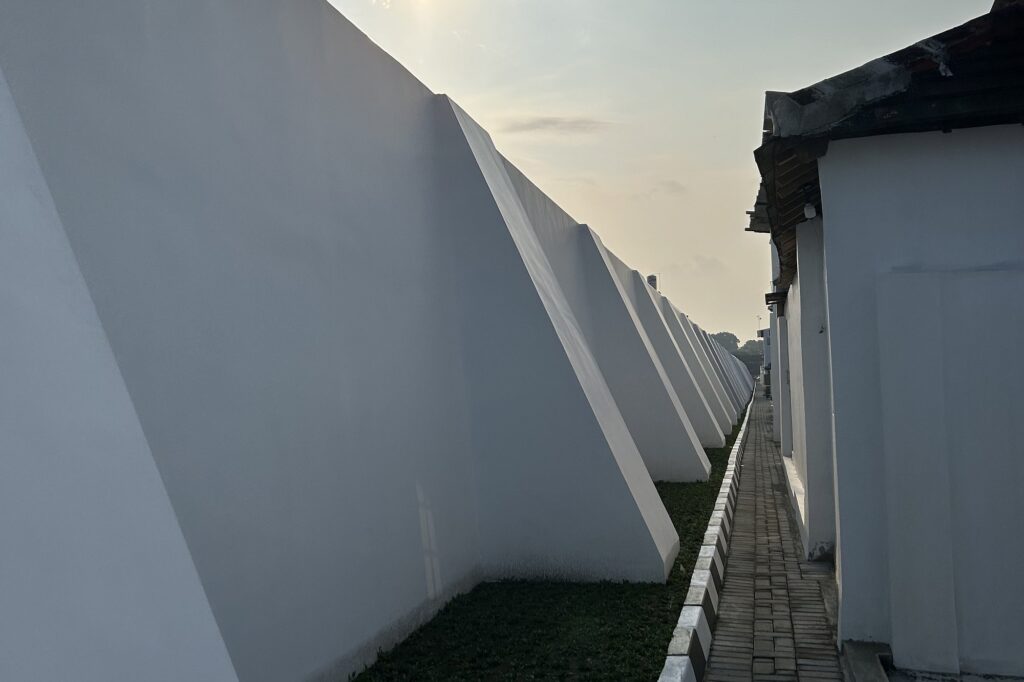
Beyond the north gate, the road suddenly tightened into a narrow brick path, squeezed between the ancient fortification and the modest back doors of the houses lining the perimeter. This transition highlights the ongoing revitalization work that defines this section of the wall. At one point, the path was completely blocked by construction, forcing a detour away from the pristine white buttresses and into the surrounding neighborhood before I could finally reach the expansive opening of the North Square (Alun-alun Utara).
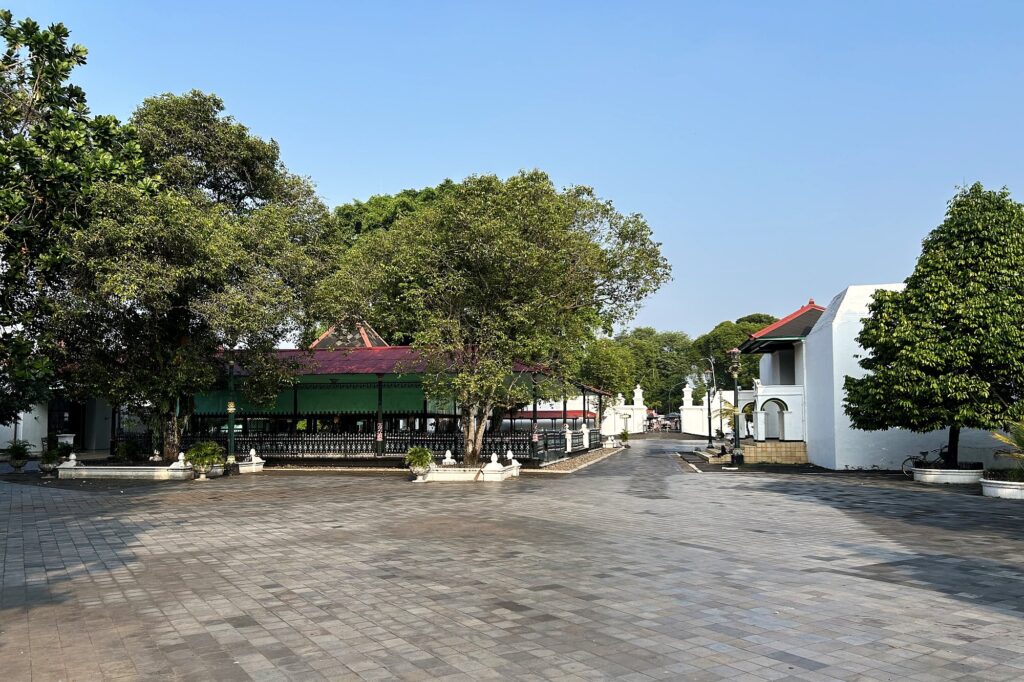
Unable to pass through the North Square, I turned south until I reached the main Palace Complex. I discovered an open gate that allowed me to pass through the heart of the grounds, which run north to south. The space opened up into a vast, breathtaking plaza. In the center stood the Bangsal Pancaniti, a beautiful pavilion used for royal events. The structure is striking—its deep green canopy and ornate pillars with gold detailing provided a regal backdrop to the quiet morning air.
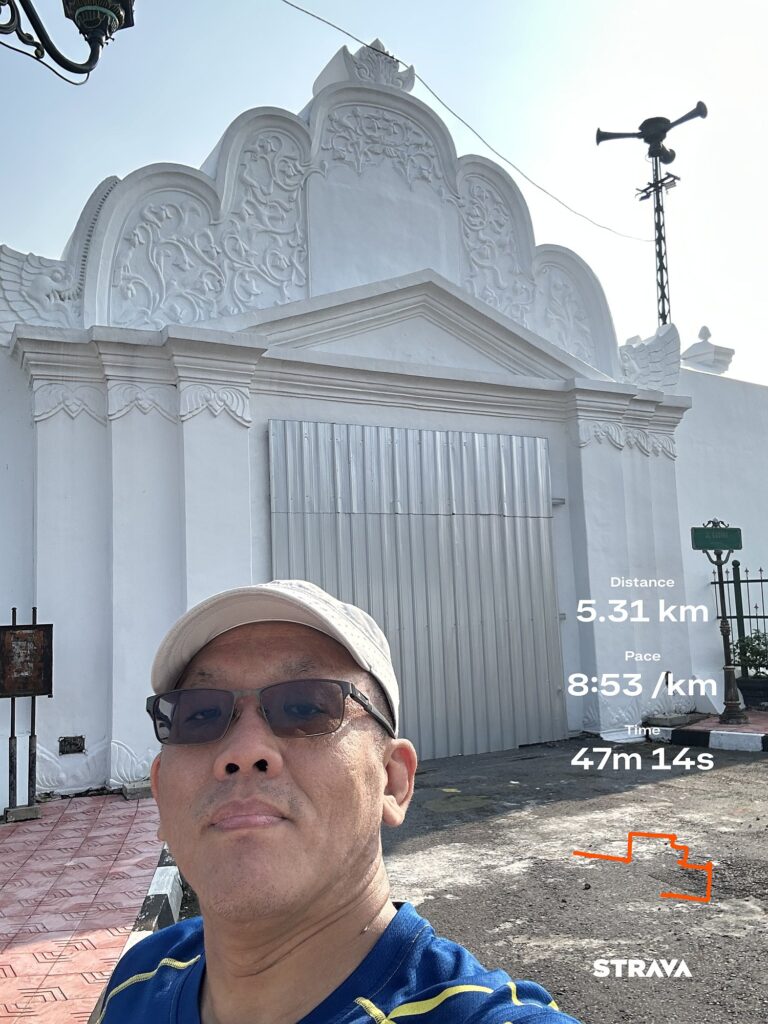
The final part of my morning run was intended to pass Plengkung Nirbaya, the South Gate that still maintains its original arched form. However, with the gate closed for renovation, I took a detour through the East Gate and turned south along the outer side of the wall. By then, the day had become hot, and the roaring sound of cars and motorbikes grew louder with the morning rush of commuters. I was so delighted when I finally reached my destination for a morning coffee, Space Roaster, completing a total distance of 5 km.